

In June 2004, Edward Nesta and I had the opportunity to visit Kalmar, Sweden a picturesque fairy-tale city complete with cobblestone streets and a castle.
We flew SAS www.sas.se Business Class from New York to Copenhagen, Denmark and then took a train from Copenhagen to Kalmar. SAS service begins in their comfortable lounge, which evokes images of Scandinavian in its design, bar and even the magazines. On board the plane, the comfortable leather seats were the epitome of Scandinavian design, with a pocket for everything, including your shoes. Although flat beds are not at every Business Class seat, Business Sleepers are available at a surcharge and may be reserved in advance. The SAS flight attendants served passengers with style and donned chef coats during the food service. We relaxed with a 1995 Henriot Champagne, which had an interesting bouquet and aggressive bubbles, which paired well with canapés of salmon roulades, tapenade and flavored broad beans, followed by Thai shrimp salad, salmon, wild rice and spinach. A cheese course followed with warm crusty bread and crackers. For dessert, the flight attendants came by with a dessert cart with delicious petit fours and chocolates. SAS gets high marks for their food and service – definitely a compliment when writing about airline food.
We arrived in Copenhagen, and had coffee and breakfast at the Hilton next-door to the airport before taking the train to Kalmar, one of Sweden’s oldest cities. Although you can fly from Stockholm to Kalmar, we decided to experience the railways and see a bit of the country from our comfortable Business Class seats. We arrived in Kalmar under bright blue skies, the air redolent of lilacs, and a vision of orange poppies gracing the landscape.
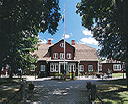
We stayed at Stufvenäs Gästgifveri www.stufvenas.se, 385 97 Söderåkra, a quaint 55-room inn full of charm and antiques. Built in 1798, it was part of the Wärnanäs estate for several hundred years, before it was sold in 1982. It is a typical Smäland style house, painted red with black trim, and is located approximately 23 miles from Kalmar. The inn can provide transportation from the Kalmar airport or train station. It is a perfect place to relax, surrounded by nature, a mere 200 meters from the sea and a sandy beach. Their ample breakfast buffet tantalized the senses as the chef brought out fresh homemade bread hot from the oven, that tasted every bit as good as it smelled. For entertainment, there is a games room with snooker and darts. There are six famous wine cellars in Sweden and the wine cellar here is one of them. Sommelier Lars Nielsen told us that they were given an Award of Excellence by Wine Spectator magazine in 1994, and they continue to have an impressive collection of 6,000 wines as well as a very 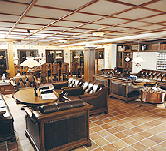 knowledgeable sommelier. Guest rooms are comfortable and charming with old-fashioned telephones, and robes to curl up in as you write a few postcards at the antique desks. There are two charming suites, so reserve your suite early, although the rooms are quite comfortable as well. One of the suites in a separate cottage consisted of a large king bedded room, a large bathroom with Jacuzzi tub and a 2-person sauna, and a Samsung flat screen television.
Touring Kalmar with our guide, Eva-Marie Hagstrom, we visited the Kalmar Läns Museum www.kalmarlansmuseum.se to see their exhibition on the wreck of the Kronan, one of the largest Swedish warships at the time it was built in 1672, was sunk in 1686, and then rested on the ocean floor until 1980 when it was discovered. Lars Einarsson, our museum guide told us that since then, they have recovered over 25,000 objects from the crystal clear Baltic Sea. Due to the low salinity of the Baltic Sea the objects were remarkably well preserved, including a woven basket with tobacco leaves in it, bottles of spices, medicines and wines, as well as clothing and other objects. They still dive during the summer months to continue searching for more objects. As a diver, it would be a dream to dive the Kronan. Touring the laboratory, Max Jahrehorn gave me a thimble to look at and hold, and since I was still travel weary, I promptly dropped it, whereby it then bounced directly into a grate on the floor! Panic stricken, I dropped to my knees in an effort to retrieve the thimble. Imagine my horror at losing something that had sat for over 300 years on the bottom of the ocean, before it was recovered, only to have it slide down a drainage pipe! Fortunately, Max removed the cover of the grate, and there was the thimble. Of course, after that experience, although he showed me other objects, he did not give me anything else to hold. Can’t say that I blamed him!
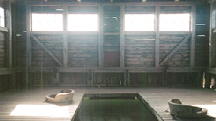 I found the laundry house, Klapphuset, which opened in 1857, and is still used today to wash hand-woven carpets to be very fascinating. The house was built over the water, and there were 4 barrels situated in the water, in which the people would stand in while they washed their carpets in the brackish water, which helps keep the colors in the carpets bright.
On course, even Kalmar has a mall, and we took time from our sightseeing to do a little shopping at the Baronen Mall. Edward, always searching for new music to add to his collection, as well as write about in his Music Review section, stopped at Rocks, a music store at the mall. Anders Florå, one of the knowledgeable and professional staff members made a number of recommendations, which he reviews in his upcoming Music Scene article.
We also had the opportunity to visit the Kalmar Castle www.kalmarslott.kalmar.se that was built in the 12th century. Lars Andersson, Managing Director, personally guided us through the castle, and told us that in the Middle Ages it was used as a border castle to 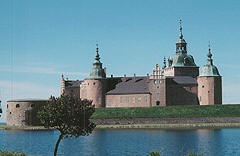 defend itself against the Danish. It later became a prison, and then was used for storage for grain. Today, Scandinavia’s best-preserved Renaissance palace is open to the public and can be used for weddings, incentives and conferences.
For dinner we went to the stylish Calmare Hamnkrog restaurant. The front of the restaurant is designed to look like the bow of a ship that actually hangs out over the water, and the ceiling is ribbed, in keeping with the ship design. There was a hanging fireplace in the middle of room, and rough wooden floors. We paired an Aresti Montemar Curico Valley, Chile, Sauvignon Blanc 2003, with our first course of salmon on mache with a crayfish dill mayonnaise. Although the wine was young, it had a nice bouquet of apples and pears, and complimented the salmon. Our next course was codfish, with 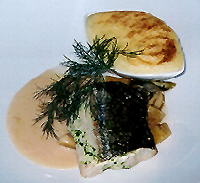 golden beets, creamy mashed potatoes as well as buttery whole new potatoes, which we paired with a Montepulciano d’Abruzzo Umani Ronchi 2002. For dessert they brought us a refreshing rhubarb drink and an interesting dessert combination of mascarpone cheese sandwiched between 2 layers of chocolate angel food cake.
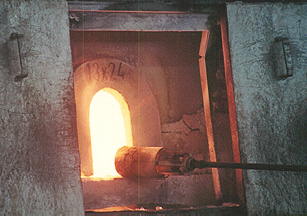
The next day we went to the Kingdom of Crystal to visit the glass factories. Although at one time there were 300 glassworks in the Kingdom of Crystal, today there are a total of 16 glassworks, with 15 of them located between Växjö and Nybro in Smäland. Since we had limited time, we visited Kosta Boda, www.kostaboda.se whose Kosta glassworks was founded in 1742, and then in the mid-1980’s Kosta Boda was formed of the companies Kosta, Boda and Åfors. We also visited Mats Jonasson Målerås www.matsjonasson.com founded in 1980 from the old Målerås glassworks that was founded in 1890, and Orrefors www.orrefors.se founded in 1898. Sweden known for its outstanding crystal has 2 schools for glassmaking: one at Kosta and one at Orrefors. It takes 10-15 years to become a master glassblower with 1 master in each workstation. The glassmaker’s pipe is 2,000 years old, and this ancient craft is often passed down from father to son. Swedish crystal is made of pot ash or soda and chemicals, and 70% pure silica sand from the Netherlands and Belgium as Swedish sand has too much of a blue-green color. This is one job where if you can’t stand the heat, this isn’t the job for you, since glass coming out of the ovens is 1,100 degrees. All three of the factories had interesting stories to tell in their designs; Kosta Boda has more colored glass with contemporary designs, Orrefors has clear crystal that it hand-cut or engraved and one of their chandeliers is at the Metropolitan Opera in New York, and Mats Jonasson Målerås has more art glass and their famous animal bas reliefs. At Kosta Boda, I had the opportunity to interview Göran Wärff over lunch at Kafé Kosta. This talented and charming artist, studied architecture and taught in England, before joining Kosta Boda in the 1960’s. Today, he is the top designer for the US market. He also explained how the design for now famous Kosta Boda snowball came about. On a day with snow lingering about, the glassblowers went outside on a break and blew glass into the snow, and the rest is history. His designs are inspired from his time spent in Australia, the ocean and tides which are apparent in his Sea Side collection. Like Göran Wärff, I too, am influenced by the sea, and had to buy a signed dolphin piece from his Sea Side collection, as well as another bowl, also from his collection. I also bought a beautiful signed milky green “donut” vase by the talented Anne Nilsson. At Orrefors, I bought hand-blown wine glasses in their Difference line, especially designed by Erika Lagerbielke to fully appreciate the nuances of each type of wine, which they shipped home for me, making shopping even easier.
In the evening, Orrefors hosted a traditional Hyttsill dinner, where in the past, workers would gather around the furnaces in winter and cook their meals in the glowing ovens. Herring was cooked on a glassmaker’s rod, potatoes were baked in the ashes, and of course there was hand-brewed ale and spirits. Our menu consisted of herring, smoked sausage, pork, baked potatoes, lingonberry preserve, bread, butter and Swedish cheesecake, along with beer, Absolut vodka, and 2 types of akavit. In keeping with tradition, there was even key-fiddle music. After dinner, a few of the guests had the opportunity to try glassblowing, assisted by Stefan and Michael Erlandsson, brothers and talented glassblowers at the factory. Edward gave it a try, and found that it was a bit difficult to keep moving the pipe to-and-fro, so that the glass didn’t fall off, while gently blowing into the pipe, but did succeed in producing a very nice large bubble.
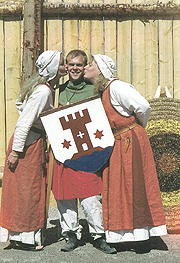 Before we left Kalmar on the train for Stockholm, we visited Salvestaden, a permanent reconstruction of the medieval city of Kalamar circa 1397, where visitors can try their hand at metal-smiting, learn about medieval herbal cures for illnesses, and even try their hand at archery. Peter Dyvik showed us how to make a cross using molten metal in a mold, and Annette Kronlund and Eva Isaksson explained herbal cures. Jesper Ericson of the newspaper Barometern www.barometern.se interviewed me regarding my impressions of Kalmar and Sweden, and Sonja Palm, the newspaper’s photographer, captured my attempts at archery in their June 4, 2004 edition of the newspaper. Amazingly, I hit the target on my first attempt instructed by Carl Wenell, but on my second attempt, as the audience cheered me on to pull back on the bow just a little more, then a little farther, that when I released the bow, I smacked myself in the eye; so much for grace under pressure. Next time, I think I will stay with my first result!
With wonderful memories, and a substantial collection of hand-blown glass, we boarded the train. Next stop – Stockholm, to be continued in our next edition of Luxury Experience magazine.
For more information on Sweden and Kalmar, please visit: www.visit-sweden.com and www.kalmar.se. For information on the Glass District, please visit: www.glasriket.se or the individual glass manufacturers web sites.
© October 2004. Luxury Experience. www.luxuryexperience.com. All rights reserved.
